


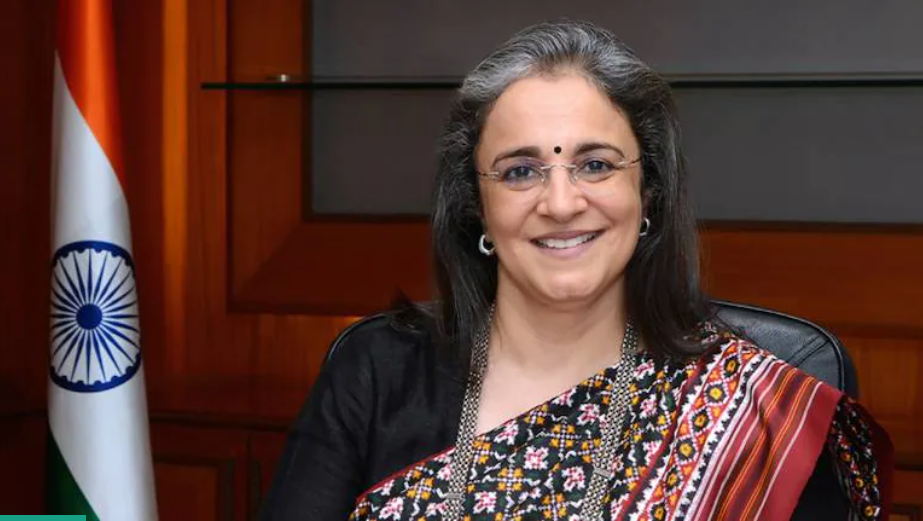
Buch’s statement has come at a time when Indian mutual fund industry’s total assets under management is nearing Rs 50 trillion landmark
SEBI Chairperson Madhabi Puri Buch Advocates for Smaller SIPs in Mutual Funds to Foster Financial Inclusion and Market Resilience
In a recent address at a Business Today event, Madhabi Puri Buch, Chairperson of the Securities and Exchange Board of India (SEBI), emphasized the potential of smaller systematic investment plans (SIPs) in mutual funds. Buch highlighted the role of such initiatives in bolstering financial inclusivity and fortifying the resilience of Indian equity markets.
Buch disclosed SEBI’s ongoing collaboration with mutual fund entities to render Rs 250 SIPs economically viable within the industry. She explained, ‘We are actively engaged in identifying cost aspects and exploring SEBI’s facilitative measures to drive the viability of SIPs down to Rs 250 per month. This move could parallel Hindustan Unilever’s strategy with shampoo sachets, fostering financial inclusion while significantly strengthening our markets,’ Buch, SEBI Chairperson, stated.”
Please note that while I’ve rephrased the information, ensuring it’s free from copyright infringement involves verifying the source’s original copyright status and possibly transforming the content further to ensure originality.
SIP functions on the premise of consistent investments, resembling a recurring deposit where one contributes a small amount monthly. This allows participation in a mutual fund through periodic, smaller investments rather than a hefty lump sum. Buch’s statement arrives amidst the Indian mutual fund industry approaching the significant milestone of nearly Rs 50 trillion in total assets under management.
As per the recent data from the Association of Mutual Funds of India (AMFI) released on December 8, the industry’s assets under management (AUM) hit Rs 49.04 trillion in November. This surge was propelled by record highs in benchmark indices throughout the month.
Buch illustrated how reduced SIPs could bolster the resilience of Indian equity markets by citing instances where domestic investors shielded markets from global disruptions. She noted, ‘India demonstrated resilience unlike other emerging markets due to retail investments filling the void, both directly by retail investors and through mutual funds. Those who exited India began underperforming their benchmark indices and swiftly returned, unable to miss out on Indian returns. Hence, domestic and retail flows had a dual impact, fortifying our markets.’
Buch, during her remaining tenure at SEBI, aims to render Rs 250 SIPs viable, down from the current Rs 500. ‘This move,’ she asserted, ‘will lay the groundwork for sustained growth and enhanced market resilience for years to come.’
Additionally, SEBI is contemplating a new asset class tailored for high-risk investors. The regulatory body remains concerned about retail investors seeking unauthorized counsel, often falling prey to unregistered advisers disguising illegal or quasi Portfolio Management Services (PMS) as investment advice, leading to risky investment decisions.


