


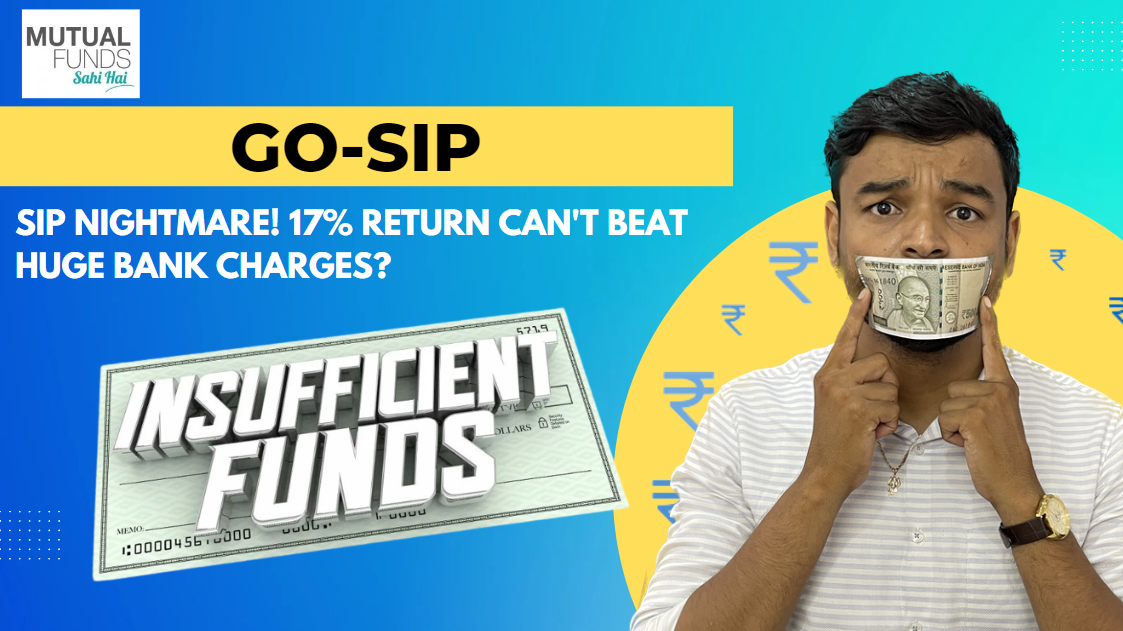
Imagine this: You set up a monthly investment of Rs 2,000 through a Systematic Investment Plan (SIP) in a mutual fund. But instead of the usual deduction, your bank charges you Rs 2,360! This can happen due to “NACH return charges,” and it can hurt small investors significantly.
What are NACH and ECS, and how do they work?
NACH and ECS are electronic systems used to automatically deduct money from your bank account for recurring payments like SIPs. They simplify transactions and reduce paperwork.
The problem: High charges for missed payments
If your bank account doesn’t have enough money on the SIP due date, you’ll incur a “return charge.” This charge can be quite high, exceeding the actual SIP amount! In our example, the charge is Rs 590 per failed transaction (Rs 500 + 18% GST), leading to a total of Rs 2,360 for four missed SIPs.
Why is this unfair?
- Disproportionate impact on small investors: Those investing Rs 500 or less get hit the hardest, as the charge can be more than their monthly contribution.
- Discourages long-term investing: High penalties can discourage people from continuing their SIPs, hurting their financial goals.
- Voluntary vs. contractual obligations: Unlike loan repayments, SIPs are voluntary investments. Penalizing people for missing them seems harsh.
What can be done?
- RBI intervention: The Reserve Bank of India (RBI) could regulate these charges, setting reasonable caps or offering grace periods for missed payments.
- Banks’ role: Banks can implement measures like timely reminders, flexible rescheduling options, and limited free waivers for missed SIPs.
Conclusion:
High NACH/ECS return charges are a burden on small investors and can hinder their financial goals. The RBI and banks need to take steps to make investing more accessible and encourage long-term financial planning.
Key points to remember:
- NACH and ECS are convenient for SIPs, but missed payments can incur high charges.
- These charges disproportionately affect small investors and discourage long-term investing.
- The RBI needs to intervene to protect small investors from unreasonable penalties.
- Banks can implement measures to prevent missed payments and support responsible investing habits.
I hope this simplified and detailed explanation clarifies the issue and its potential solutions.


